
- Introduction
- What Is GRP Grating?
- Why GRP Grating Stands Out in Corrosive Environments
- Why GRP Grating Is Ideal for Marine Applications
- Structural Advantages of GRP Grating
- Applications of GRP Grating in Corrosive and Marine Environments
- Economic Advantages of GRP Grating
- Environmental Benefits of GRP Grating
- Choosing the Right GRP Grating for Your Application
- Benefits of Using GRP Grating in Modern Engineering Projects
- FAQs About GRP Grating
- Conclusion
Introduction
In industries where durability, corrosion resistance, and long-term performance are critical, choosing the right material for flooring and structural support systems can make a significant difference. This is why GRP Grating has rapidly become the preferred choice among engineers working in chemical plants, marine facilities, offshore platforms, wastewater treatment plants, and other demanding environments. Its unmatched strength-to-weight ratio, anti-corrosive properties, and design versatility give it a competitive advantage over traditional materials like steel and aluminium.
This article explores in depth why engineers consistently choose GRP Grating for corrosive and marine environments. By examining its benefits, applications, performance characteristics, and long-term economic value, you will understand how GRP Grating delivers superior reliability and safety in some of the harshest conditions.
What Is GRP Grating?
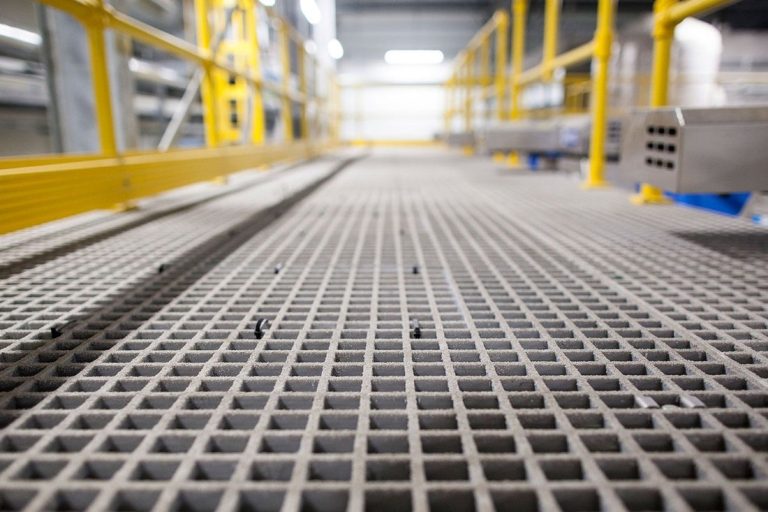
GRP Grating, or Glass Reinforced Plastic grating, is a composite material made from resin and glass fibre reinforcement. This combination produces a high-strength, lightweight, and corrosion-resistant product suitable for industrial and marine environments.
Types of GRP Grating
Moulded GRP Grating
Moulded GRP Grating is manufactured by interweaving glass fibres and resin in a mould, creating a one-piece, seamless panel. It offers excellent corrosion resistance and bi-directional strength.
Pultruded GRP Grating
Pultruded GRP Grating is produced by pulling continuous glass fibres through resin and then through a heated die. This method creates high unidirectional strength, making it ideal for applications requiring greater load-bearing capacity.
Why GRP Grating Stands Out in Corrosive Environments
1. Unmatched Corrosion Resistance
In corrosive environments—such as chemical plants, desalination facilities, and wastewater treatment sites—traditional steel grating deteriorates rapidly. Corrosion weakens structural integrity, leading to increased maintenance and replacement costs.
GRP Grating, however, is non-metallic and engineered to resist a broad range of corrosive chemicals. Whether exposed to acids, alkalis, solvents, or saltwater, GRP Grating maintains its structural integrity without rusting or oxidising.
2. Long-Term Performance in Harsh Conditions
Where steel may fatigue or corrode, GRP Grating provides dependable performance over decades. Its resistance to UV radiation, moisture, high temperatures, and chemical exposure significantly reduces maintenance needs.
3. Fire and Slip Resistance
In many industrial environments, fire-safety compliance is critical. GRP Grating can be manufactured with fire-retardant resins to meet national and international fire safety standards. Additionally, its anti-slip surface ensures worker safety even in wet or oily conditions.
Why GRP Grating Is Ideal for Marine Applications
1. Superior Resistance to Saltwater
Saltwater corrosion is one of the biggest challenges in marine and offshore engineering. Steel gratings corrode quickly in salty air and direct seawater exposure, requiring constant maintenance.
GRP Grating resists saltwater corrosion naturally, making it ideal for:
- Ship decks
- Piers
- Offshore platforms
- Docks and harbours
- Seawater intake facilities
2. Lightweight and Easy to Install
Marine environments often involve complex installations where weight is a major factor. GRP Grating weighs significantly less than steel while offering comparable or superior load-bearing capacity.
Lighter materials reduce:
- Transport costs
- Installation time
- Need for heavy machinery
3. Non-Conductive and Safe
Electrical safety is crucial in marine applications. Unlike metallic materials, GRP Grating is non-conductive, reducing the risk of electrical hazards on boats, offshore rigs, and marine processing plants.
Structural Advantages of GRP Grating
1. High Strength-to-Weight Ratio
Despite being lightweight, GRP Grating delivers robust strength. Its engineered composition allows it to handle heavy loads while remaining easy to maneuver and install.
2. Dimensional Stability
Even under extreme temperatures and mechanical stress, GRP Grating retains its shape. It does not warp, shrink, or expand excessively, ensuring long-term reliability.
3. Impact Resistance
Impacts from dropped tools or machinery can cause severe damage to metal grating. GRP Grating has exceptional impact resistance thanks to its fibre-reinforced structure.
Applications of GRP Grating in Corrosive and Marine Environments
Corrosive Industrial Applications
Engineers frequently install GRP Grating in:
- Chemical plants
- Fertilizer factories
- Desalination plants
- Power stations
- Pharmaceutical manufacturing
- Wastewater treatment facilities
In these environments, constant exposure to corrosive chemicals and moisture makes GRP Grating the most reliable and cost-effective solution.
Marine and Offshore Applications
Because of its adaptability and corrosion resistance, GRP Grating is widely used in marine engineering for:
- Offshore oil and gas platforms
- Seawater pumping stations
- Jetty walkways
- Marine vessels
- Port infrastructure
- Fish farms
Engineers rely on GRP Grating here because it ensures worker safety, withstands harsh weather, and resists saltwater corrosion for long periods.
Economic Advantages of GRP Grating
1. Reduced Maintenance Costs
Traditional steel or metal grating requires frequent inspection, repainting, and replacement due to corrosion. GRP Grating needs minimal maintenance, reducing downtime and repair costs dramatically.
2. Lower Life-Cycle Cost
Although initial costs may sometimes be slightly higher than steel, the long-term savings from reduced maintenance make GRP Grating a more economical choice.
3. Extended Lifespan
The combination of corrosion resistance, UV protection, and structural durability allows GRP Grating to offer a much longer lifespan than conventional materials.
Environmental Benefits of GRP Grating
1. Longer Service Life Means Less Waste
Because GRP Grating lasts significantly longer than steel, there is less waste generated over time from replacement and repairs.
2. Chemical and Corrosion Resistance Reduces Contamination
Metallic materials often release rust, flakes, and chemical residues as they corrode. GRP Grating eliminates this risk, contributing to cleaner and safer environments.
3. Supports Sustainable Engineering
More engineers are turning toward composite materials like GRP Grating as part of sustainable and environmentally responsible construction practices.
Choosing the Right GRP Grating for Your Application
1. Consider Load Requirements
Different applications require different load ratings. Pultruded GRP Grating typically offers the best performance for heavy-duty applications.
2. Select the Right Resin System
Common resin systems include:
- Isophthalic resin for industrial use
- Vinyl ester resin for harsh chemical exposure
- Phenolic resin for high fire resistance
Choosing the right resin ensures your GRP Grating performs optimally.
3. Surface Options
Surface choices include:
- Gritted surface for slip resistance
- Concave top for easy cleaning
- Smooth surface for specialized applications
4. Panel Size and Thickness
Engineers must select appropriate panel thickness, mesh size, and dimensions to match their project’s safety and design requirements.
Benefits of Using GRP Grating in Modern Engineering Projects
Enhanced Safety
Anti-slip textures, fire resistance, and non-conductive properties make GRP Grating a superior choice for hazardous environments.
Design Flexibility
Engineers can easily cut and customize GRP Grating panels on-site without specialized tools, ensuring fast adjustments and precise fitting.
Aesthetic Appeal
With various colors and finishes available, GRP Grating can enhance the appearance of industrial and marine installations.
FAQs About GRP Grating
Why is GRP Grating ideal for corrosive environments?
GRP Grating resists rust, chemical attacks, and moisture, making it perfect for harsh, corrosive conditions.
Can GRP Grating withstand marine conditions?
Yes, GRP Grating is highly durable in saltwater and coastal environments without corroding like steel.
Does GRP Grating require frequent maintenance in corrosive areas?
No, GRP Grating is low-maintenance and retains strength and durability even in aggressive chemical or marine settings.
Conclusion
Engineers across the globe continue to choose GRP Grating for corrosive and marine environments because of its unparalleled durability, corrosion resistance, safety features, and long-term economic advantages. Whether used in chemical plants, offshore oil platforms, marine structures, or wastewater facilities, GRP Grating demonstrates exceptional performance under harsh conditions. Its lightweight nature, ease of installation, and design flexibility make it a reliable and cost-effective solution for modern engineering challenges.